How to Choose the Right Business Copier: A Short Checklist
When
you have the office copy machine in your business, you can drastically
improve the way your company operates. If you have the right copier, you
won't find employees lined up waiting for jobs to be completed, or
wasting time doing tasks manually that could be automated. Essentially,
with the right copier, your employees spend less time copying or
printing, and more time doing tasks that significantly affect your
bottom line.
When choosing which copier is right for your business, ask yourself these questions:
What Will The Machine Be Used For?
Make a list of tasks
you need your office copy machine to perform. For example, many
businesses use their machines for copying, scanning, faxing, printing,
folding, stapling, binding and saddle stitching. Essentially, the idea
is to automate any type of task your copier could have the ability to
handle. It's a good idea to separate this list into two columns:
must-haves and wants. Your copier must be able to print, and you might
want it to be able to handle saddle stitching, but the latter may not be
essential. This will assist you when determining the final
configuration and investments required for your equipment.
How Much Volume Is Printed Every Month?
Essentially: how much are you using your office copier? Are you
printing off thousands of documents, or are you only printing a couple
pages each day? How many employees are using the copier to print
documents? Higher-end copiers typically handle volume better than
lower-end varieties.
Once you know how much volume you're printing each month, you'll better be able to answer the next question, too.
How Fast Do You Need To Print To Keep Up With Demand?
If you've ever noticed a line forming at your copier, or people
complaining about how long it takes to print something, then your copier
is not printing enough pages-per-minute to keep up with your office’s
demand. Or, your machine may be tied up producing a large, complicated
print project. This one is a bit trickier to gauge, but the best way to
answer it is to pay attention to your copiers during the busiest time of
the day. Are the machines backed up? If so, they either need to print
faster, or you need to add copy machines to your fleet.
How Many Machines Are Needed?
Many factors need to be considered when you're determining how many machines your business needs.
First, look at the volume. How much are you printing? Next, consider
the number of employees that need to use the printer on a regular basis.
Finally, think about the layout of your office. Specifically, how far
does each employee have to go to get to the nearest printer? If they
have to wander through a maze of cubicles or go to another floor in your
building, the device may be too far away and your employees’ time is
being wasted.
What Are Your Current Costs?
You'll probably need a spreadsheet for this one. List every type of
cost associated with your current copier solution. Are you spending
money on repairs? What do your supplies – toner, paper, staples, etc. -
cost? How much are you paying for service? How much is it costing you to
print documents? Make sure to factor in supplies, paper and toner,
maintenance, troubleshooting, etc.
Read Understand the Components that Determine Your Printing Costs for assistance in gathering and calculating all costs related to your organizations printing.
Choose the Right Office Copy Machine
Answering these questions will undoubtedly help you make the correct
business decision, but it is easier said than done. Unless you've been
consciously paying attention to your costs and print volume, for
example, up until this point, it may be difficult to get an accurate
measurement without some help.
A print provider can assist in collecting this information. Once the
data is gathered, together you can analyze and translate it into
answers. At this point, choosing the right business copier is simple.
CL408NX | CL412NX | CL424NX | CL608NX | CL612NX
Voted Best for Reliability. No other barcode printer manufacturer can
make this claim about its printers, as only SATO received the 2016 best
for reliability award by resellers and integrators of the industry. SATO's CLNX Series
sets a new and exciting industry standard for ease of use,
intelligence, emulations, connectivity, speed of processing data
streams, user activity interface, and so much more.
Built with integrity, designed with the operator and productivity in
mind, the CLNX will surpass your expectation of today’s printing
technology.
NEW: Certified Integration with SAP® Auto-ID Infrastructure
Every
year, over 4 million workers are the victim of a serious injury or
illness on the job. Daily, more than 12 of these injuries result in
death. The majority of these injuries and deaths can be prevented if the
hazards that caused them had been properly identified and controlled
ahead of time. The importance of conducting a worksite hazard assessment
is immense; if the tragedies caused to an employee and their family by
serious injury or death isn’t reason enough, company losses as a result
each year are in the billions of dollars.
A thorough hazard
assessment will allow you to identify and then eliminate or control
physical hazards and unsafe employee work practices before they occur.
Review these five basic steps to get you started on your hazard
assessment.
1. Preparation
Before you can begin the actual
assessment, you’ll need to create a system of job prioritization and a
ranking system for the severity of each hazard. In general, it’s most
effective to begin with jobs with the highest risks, such as:
Documented to have frequently resulted in injury or illness
Present severe and life-threatening hazards even if there is no documented instances of prior occurrences
Undergone significant changes in procedure or equipment or are altogether new to your company
Procedures of a nature complicated enough to require written instructions
Involve serious and life-threatening hazards that could be triggered by a single worker error
After
you have determined a priority system, the next step in preparation is
to develop a method of ranking hazards by their potential severity
considering both probability and severity. To give you an example:
The
highest ranking of probability would include employee contact with a
hazardous material or atmosphere, because an injury is nearly
guaranteed. The lowest ranking would be that it is virtually impossible
for injury to occur.
In terms of severity, the highest ranking may
be that the injury will almost certainly cause fatality to numerous
workers, and the lowest that the worst-case scenario is a minor cut or
bruise.
In this way, you will be able to see a written, visual
representation of what jobs and hazards will require the most
highly-focused attention.
2. Job Step
Next you create your
job hazard analysis. For best organization and record keeping, you
should create a separate document for each individual job on the
worksite. Each document should consist of three columns: Job Step,
Possible Hazards, and Preventative Measures.
In the Job Step
column, describe each basic step of a task, from first to last. For
example, if the task involves an employee receiving a shipment at the
warehouse, the first step may be described: Employee guides delivery truck to the loading dock.
Cover
each individual step of the job process, including both the person
involved (employee, manager, maintenance crew, etc.) as well as the
action (guiding the truck, loading shipment onto pallets, etc.).
3. Possible Hazards
In
the center column, describe any imaginable safety hazards associated
with the job step indicated in the first column. Be thorough — where
safety is concerned, leave no stone unturned.
Regarding the
aforementioned example, the obvious safety hazard may be that the worker
is out of view of the driver and the delivery truck is backed up over
them. But there are other considerations. Is the worker guiding the truck from an elevated loading dock (is there a falling hazard?)? Is it possible for the worker to become crushed between the truck and a nearby stationary object? Are there clearance issues?
When identifying and documenting hazards, be complete enough in your description to answer the following questions:
What could possibly go wrong?
What would the result be should a worker come into contact with the hazard?
How could the worker come into contact with the hazard?
What other factors may contribute to the hazard?
What is the likelihood of the hazard arising?
Example: “If
the employee is standing too close to an unprotected edge of the
loading dock(1) or they are knocked over by the moving delivery
truck(4), there is a high risk(5) that they may fall to the lower
level(3) resulting in bodily impact injuries or death(2).”
4. Preventative Measures
In
the final column, describe any possible preventative measures that
could be implemented to either control or altogether eliminate the
safety hazard. When considering prevention, take the three control
methods into account: Engineering Controls:
Engineering
controls involve physically altering equipment or environments to
prevent employees from coming into contact with a hazard. In the example
we’ve been using, one possibility may be to install guardrails along the leading edges of the dock where an employee would be stationed. Another idea would be to implement
visual or audial indicators such as flashing lights or warning sounds
to assist delivery truck drivers in backing up without the necessity of
an employee being within close physical proximity.
Engineering
controls are considered to be the most desirable and effective form of
hazard prevention because they eliminate the hazard altogether.
Engineering should always be the first step when possible. Administrative Controls
If
it is impossible to engineer a hazard out of existence or displace
employees from a hazard’s exposure, the next best step would be
administrative controls.
These controls involve monitoring,
adjusting, or training safe work practices into employees’ job routines.
An example may be that the employee uses pre-established hand
signals for guiding a delivery truck driver while remaining in a
designated and visible safe area.
Safety training is included as an administrative control.
Administrative controls are often thought of as only moderately effective since they rely on human behavior. Personal Protective Equipment (PPE)
PPE
should be required whenever possible, but never considered the primary
defense against a safety hazard. This can include safety goggles,
gloves, hard hats, back braces, face shields, chemical protection
aprons, respirators, etc. For example, if the employee is exposed to
exhaust fumes while guiding delivery trucks to the loading docks,
requiring respirators or face masks may be desirable.
Job hazard
assessments need to be thought of as a living document; they should
undergo constant maintenance and upgrades as new hazards and hazard
control methods are identified. Also update the assessment whenever
there is a change to the work process.
Remember to be as thorough
as possible — it’s much better to go overboard in describing the layout
of a hazard than to overlook a crucial element.
To leave you with a final thought from a supervisory perspective:
Unfortunately,
employees who have become comfortable and adept enough at performing
their jobs may be inclined to implement their own ideas on safe
practices. A job hazard assessment is only effective if it results in
preventative actions taken, and actions taken are only guaranteed if
employees are encouraged to do so with positive supervision and
continuing training.
As
you lift a load, the Posture Feedback System engages by applying
pressure against your back if you move into an improper position. This
is designed to remind the user to change their position to reflect the
NIOSH and OSHA lifting guidelines. We recommend daily use of the FLx to
maintain good posture throughout the workday, as energy and job
intensity changes throughout the day.
ROTATING
If
you rotate your body beyond the recommended guidelines, the Posture
Feedback System activates, applying pressure to your opposite shoulder
and back. This is designed as a reminder to the user that they should
change their position to a proper lifting posture.
PRO PAK’R – The Easy to Use Air Cushion Machine with Smart Technology
All existing machines in the field will be replaced by PRO PAK'Rs in the coming years, at no cost to customers.Last updated on
FP International introduces the PRO PAK’R air cushion system. A reliable air cushion machine that stands out from the crowd. Protective packaging manufacturer, FP International,
focuses on offering their customers new and efficient solutions. Within
their air cushion systems and films product line, they now introduce
the PRO PAK’R: the air cushion system.
At first the machine was
released on the German market in March 2014, and from there on in other
EU-countries. In November, during the trade show EMBALLAGE in Paris Nord
Villepinte, FP International presented the PRO PAK’R to the public.
“This machine features the latest technology, only offered by FP
International. The PRO PAK’R is fast, smart, easy to operate, and takes
up little space,” says Pierre Vu, PRO PAK’R project manager. “Another
major advantage: the PRO PAK’R operates with various films.”
Easy and fast
The
machine of only 16 kilograms produces no less than 21 meters of cushion
per minute. All existing machines on the field will be replaced by PRO
PAK’Rs in the coming years, at no cost for their customers. This is the
first time ever that o the protective packaging market that the whole
installed base will be upgraded with the latest technology.”
Smart technology
Due
to RFID, used by the PRO PAK’R to recognise the variety of films, users
only have to set up the machine once. The air cushion system stores all
historical data on a USB stick for future reference. Pierre Vu: “This
unique feature utilizes various benefits: an improved reliability as
servicing the machine is made easier, more efficient and optimized
machine as history data can tell how the machine has been operated.”
The machine can be expanded with different accessories, ranging from a
foot pedal and remote control, to a system stand and an overhead dispenser.
As an additional service, FP International has developed
state-of-the-art computer graphic videos, with clear step by
step explanations of the machine itself, its use and maintenance.
Film Types:
Eco Range
The
Eco range is both economic and ecological. These films are made of the
thinnest and yet very strong material. By choosing a thinner material,
they use less plastics, which results in more film on a roll. This is
obviously good for the environment, but it is also cost-effective for
you. Your stock of film lasts longer thanks to optimized film quality
and it also means less transportation. That certainly makes a difference
to your and our environment. Square Shaped Air Bag
Square
shaped air bag that is the most wide spread size on the market.It is
perforated every 13 cm making it very flexible in terms of applications.
Made with recycled PE material to help contributing to the environment.
Ideal for
Different sizes of boxes and filling small voids.
Customers who want simple and versatile solutions.
Applications
Void-filling:
Needed when the outer carton is larger than the products to be packed.
Filling voids will help to prevent movement within the box.
Blocking:
This is an application that enables you the maximum protection without
having to fill all voids in your carton. By ‘fixating’ the product with a
limited number of air cushions, your prevent your product from moving
in the box.
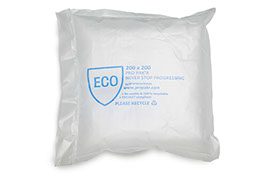
Standard Air Cushion Standard
air cushion that is ideal to fill large voids. Air cushions helps you
reducing your transportation costs as 99% is made from air! Provides
a large volume yield at filling large voids, with noticeable benefits
for the environment. Produce filling on demand with this square pillow,
wherever and whenever you want.
Ideal for
The filling of large areas and / or fixing materials for shipment.
Applications
Void-filling:
Needed when the outer carton is larger than the products to be packed.
Filling voids will help to prevent movement within the box.
Blocking:
This is an application that enables you the maximum protection without
having to fill all voids in your carton. By ‘fixating’ the product with a
limited number of air cushions, your prevent your product from moving
in the box.
Double Cushion Especially
designed for large void-fill applications. Two large cushions are
connected to each other by the patented air transfer technology,
offering a superior product protection. An intelligent air cushion
that not only provides high-volume output, but also air-transfer
technology: high quality protection at lower costs. Due to the increased
width of the film (460mm), there are more opportunities void-fill per
meter. The thinner and angled air intake also provides many
improvements: such as lower noise and the possibility of more air in the
cushions.
Ideal for
Filling large empty spaces.
Products that require a high protection level.
Applications
Void-filling:
Needed when the outer carton is larger than the products to be packed.
Filling voids will help to prevent movement within the box.
Blocking:
This is an application that enables you the maximum protection without
having to fill all voids in your carton. By ‘fixating’ the product with a
limited number of air cushions, your prevent your product from moving
in the box.
Classic Range
The
Classic range contains four variants and has the high quality that their
customers have known for years and years. Strong yet flexible, the best
of its kind. These films consist partly of recycled material, making
production and use of materials less harmful to the environment. The
various types of air cushions in the Classic series match for purposes
like filling, blocking and wrapping. Square Shaped Air Bag Especially
designed for large void-fill applications. Two large cushions are
connected to each other by the patented air transfer technology,
offering a superior product protection. An intelligent air cushion
that not only provides high-volume output, but also air-transfer
technology: high quality protection at lower costs. Due to the increased
width of the film (460mm), there are more opportunities void-fill per
meter. The thinner and angled air intake also provides many
improvements: such as lower noise and the possibility of more air in the
cushions.
Ideal for
Filling large empty spaces.
Products that require a high protection level.
Applications
Void-filling:
Needed when the outer carton is larger than the products to be packed.
Filling voids will help to prevent movement within the box.
Blocking:
This is an application that enables you the maximum protection without
having to fill all voids in your carton. By ‘fixating’ the product with a
limited number of air cushions, your prevent your product from moving
in the box.
Standard Air Cushion Square
shaped air bag that is the most wide spread size on the market.It is
perforated every 13 cm making it very flexible in terms of applications.
Made with recycled PE material to help contributing to the environment.
Provides a large volume yield at filling large voids, with noticeable
benefits for the environment. Produce filling on demand with this square
pillow, wherever and whenever you want.
Ideal for
The filling of large areas and / or fixing materials for shipment.
Applications
Void-filling:
Needed when the outer carton is larger than the products to be packed.
Filling voids will help to prevent movement within the box.
Blocking:
This is an application that enables you the maximum protection without
having to fill all voids in your carton. By ‘fixating’ the product with a
limited number of air cushions, your prevent your product from moving
in the box.
Quilt Medium and Large
Medium Quilt Super
tough film that reduces the number of wraps drastically. Where you
normally need to perform several wrap arounds, this 26mm heigh bubble
gives superior protection to your large sized products. The solution
to wrap products quickly and easily in high quality. Quilt Medium is
their widest cushion and made of 12% recycled PE material. Due to the
packaging and wrapping with their flagship product, you can protect your
goods and at the same time the environment! With the help of new
technology you will end up with less waste of film when producing air
cushions. This film is also called the alternative for bubble wrap. An
air-filled pillow that has a bubble-like structure and with their air
cushion technology this film protects even better. When applying
pressure on one side, the air automatically transports to the other side
through the cells structure of the film.
Ideal for
The wrapping of large objects such as doors, screens and signs.
As an alternative to standard foam products and bubble wrap.
Applications
Cross-layer:
By crossing 2 layers of film diagonally in a box, you ensure an
allround protection of your product in just a few moves.
Wrapping:
Covering a product completely with air cushions is in some cases
needed. Due to the height of the bubble, single wrapping is possible
saving you money on handling and storage.
Interleaving: Applying sheets of film between each product makes it possible to pack and stack several product within one box.
Large Quilt Super
tough film that reduces the number of wraps drastically. Where you
normally need to perform several wrap arounds, this 26mm heigh bubble
gives superior protection to your large sized products. With this
thinner foil of 12% PE material, FP International sets a new standard!
This is their most versatile air transfer air cushion which can be used
for wrapping, the application of cross layers, but also for top layers.
With the help of new technology you will end up with less waste of film
when producing air cushions. And that’s good news for the environment.
This film is also called the alternative for bubble wrap. An air-filled
pillow that has a bubble-like structure and with their air cushion
technology this film protects even better. When applying pressure on one
side, the air automatically transports to the other side through the
cells structure of the film. To improve the speed of packaging they
added a new feature to their film: the Handle Cut. This solution makes
it possible to package with one hand: an opening in the center of each
perforation, the user can – with one hand in a single motion – separate
the air cushions from each other.
Ideal for
Odd molded articles
Fragile items
Companies with small storage space.
Applications
Cross-layer:
By crossing 2 layers of film diagonally in a box, you ensure an
allround protection of your product in just a few moves.
Wrapping:
Covering a product completely with air cushions is in some cases
needed. Due to the height of the bubble, single wrapping is possible
saving you money on handling and storage.
Interleaving: Applying sheets of film between each product makes it possible to pack and stack several product within one box.
Specs:
Runs all film types that offer a wide range of applications • ECO & CLASSIC range
NEWSWIRE SNIPPETS
Keep up to date on LLDPE, PVC pricing developments.
Follow
@westernplastics on
Twitter
The Dow Chemical Company - Polyethylene Price Notification
Effective May 1, 2016 US
LLDPE Resin increase #3 set for May
Will impact future stretch film costs
Effective May 1, 2016, The Dow Chemical Company (TDCC)
will increase the selling price of all polyethylene
resins in the United States by US$0.05/lb.
This announcement is in addition to all previously announced
increases.
Products included in this price increase are as follows:
All other HDPE and LLDPE Resins (Read
Dow Letter)
BULLISH SENTIMENT ON PE RESIN –
ethylene monomer costs soar driving resin
prices up
In response to this April 1st resin increase,
all new orders received on or after May 2nd will be
priced at a 5% increase. This increase is in
addition to our previously announced increase
implemented April 4th. Improving global and domestic
demand, along with rising feedstock costs are
currently supporting this increase. U.S. Stretch Film Producer April 2016
How to play in a volatile
stretch film arena
Forecast your needs for stretch film – Buy in 60 days
supply at todays price in a firming LLDPE stretch
film market
Western Plastics offers authorized
distributors lower minimums/shorter lead times for immediate
billing
A LOADED QUESTION "what is the current price for
stretch? Bring a firm purchase order and we will talk."
As a result of recent resin increases and the
announcement of further increases by resin
suppliers, we find it necessary to increase the
prices on all PVC packaging films by 8%. This
increase includes all meat/produce/cheese/deli,
laundry and specialty films. (Read letter) U.S. PVC Film Producer
LLDPE RESIN TRADE CONTINUES BUSY
– PE buyers are out in force in anticipation of future
higher pricing
NEW NOMINATION – April increase
announced for LLDPE (4c/lb) on top of March 5c/lb hike Trade Reports March 2016
 When
you have the office copy machine in your business, you can drastically
improve the way your company operates. If you have the right copier, you
won't find employees lined up waiting for jobs to be completed, or
wasting time doing tasks manually that could be automated. Essentially,
with the right copier, your employees spend less time copying or
printing, and more time doing tasks that significantly affect your
bottom line.
When
you have the office copy machine in your business, you can drastically
improve the way your company operates. If you have the right copier, you
won't find employees lined up waiting for jobs to be completed, or
wasting time doing tasks manually that could be automated. Essentially,
with the right copier, your employees spend less time copying or
printing, and more time doing tasks that significantly affect your
bottom line.




 dispenser.
As an additional service, FP International has developed
state-of-the-art computer graphic videos, with clear step by
step explanations of the machine itself, its use and maintenance.
dispenser.
As an additional service, FP International has developed
state-of-the-art computer graphic videos, with clear step by
step explanations of the machine itself, its use and maintenance.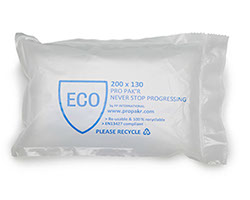
 Standard
air cushion that is ideal to fill large voids. Air cushions helps you
reducing your transportation costs as 99% is made from air!
Standard
air cushion that is ideal to fill large voids. Air cushions helps you
reducing your transportation costs as 99% is made from air!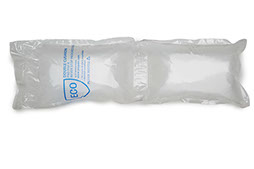 Especially
designed for large void-fill applications. Two large cushions are
connected to each other by the patented air transfer technology,
offering a superior product protection.
Especially
designed for large void-fill applications. Two large cushions are
connected to each other by the patented air transfer technology,
offering a superior product protection.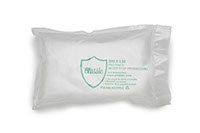 Especially
designed for large void-fill applications. Two large cushions are
connected to each other by the patented air transfer technology,
offering a superior product protection.
Especially
designed for large void-fill applications. Two large cushions are
connected to each other by the patented air transfer technology,
offering a superior product protection.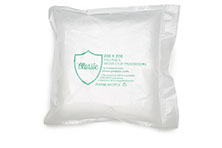 Square
shaped air bag that is the most wide spread size on the market.It is
perforated every 13 cm making it very flexible in terms of applications.
Made with recycled PE material to help contributing to the environment.
Square
shaped air bag that is the most wide spread size on the market.It is
perforated every 13 cm making it very flexible in terms of applications.
Made with recycled PE material to help contributing to the environment.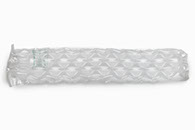 Super
tough film that reduces the number of wraps drastically. Where you
normally need to perform several wrap arounds, this 26mm heigh bubble
gives superior protection to your large sized products.
Super
tough film that reduces the number of wraps drastically. Where you
normally need to perform several wrap arounds, this 26mm heigh bubble
gives superior protection to your large sized products.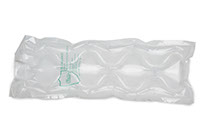 Super
tough film that reduces the number of wraps drastically. Where you
normally need to perform several wrap arounds, this 26mm heigh bubble
gives superior protection to your large sized products.
Super
tough film that reduces the number of wraps drastically. Where you
normally need to perform several wrap arounds, this 26mm heigh bubble
gives superior protection to your large sized products. Twitter