Monday, October 20, 2014


Tuesday, October 14, 2014
You can save big early on ice melt!!
|
|||||
|
|||||
|
|||||


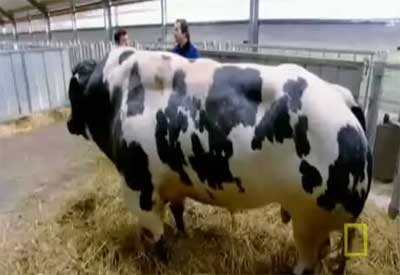
Did you know the Dairy industry is creating a super cow??
October 12th, 2014, 5:33 pm
Dairy industry is creating a super cow
Walt Moore’s 850 cows lounge on beds of soft sand.They are cooled by spritzes of water and breezes generated by fans. They eat a custom-blended diet of gourmet grains that a computer tells Moore will suit them best.
Moore orders sophisticated analyses of their rations and manure, getting the results on his iPhone, synced to his watch.
Each cow wears a collar with a computer chip that keeps track of her milk production, nearly four times that of the cows his father once tended, not to mention those his great-grandfather started the family farm with in 1909.
Moore’s Chester County, Pa., farm is so markedly different from the operation he took over from his father, Bill, that the elder Moore jokes: “Oh, my goodness, I don’t know if I’ll live long enough to learn how to farm or not.”
All this is not so much to coddle the cows as it is to make them better citizens of the planet. Cows have long been castigated for their methane-belching, manure-producing ways, one of agriculture’s top contributors to climate change.
In its 2012 inventory of greenhouse gas emissions, the U.S. Environmental Protection Agency fingered the methane emissions of “enteric fermentation”—the digestive process of animals with multichambered stomachs—as second only to emissions from natural gas and petroleum systems.
Dairy cow emissions in particular are so problematic that they have received the attention of the White House. President Barack Obama’s Climate Action Plan, released in March, proposed cutting methane emissions from the U.S. dairy industry by 25 percent by 2020.
Pundits scoffed. One headline: “Barack Obama and His EPA Make War On Dairy Cows.” But the idea had already taken hold seven years earlier when the U.S. dairy industry pledged the same goal.
After analyzing the dairy production chain, farm to fridge—or, as some like to say, grass to glass—they zeroed in on the cow’s gut, launching a massive effort involving farms and universities.
They call it the Cow of the Future project. The aim is a super-cow, a star athlete of the bovine world that produces far less methane and, while she’s at it, far more milk.
“We want it to be more productive. We want it to be healthier. We want it to be a problem-free cow,” said Juan Tricarico, director of the project.
To that end, cows and all of their processes have gone under the microscope. Their feed, their genes, their daily living conditions have been analyzed.
They have been fitted with gas-collecting backpacks and even had gas-analysis gear inserted into their stomachs.
“In a certain sense,” Tricarico said, the methane “is the price that we have to pay to transform inedible cow feed— something that you and I cannot consume and get nutrition from— into milk.”
Indeed, “if we got rid of cows, we’d have this tremendous problem with crop residues that we can’t digest,” said James Ferguson, a nutritionist at the New Bolton Center, the large-animal campus of the University of Pennsylvania School of Veterinary Medicine.
“We really need to think about a food web, a food network, of how we feed people and how nutrients move through the system,” Ferguson said. “Herbivores— cows— are a really important step in this process.”
Cows have already come far since the heyday of the daisy-bedecked Elsie, the Borden’s mascot.
As of 2007, the nation had about a third of the dairy cows it had in 1944, yet they produced more than half again as much milk. And they did it using 90 percent less cropland and 65 percent less water. They also made 75 percent less manure and 63 percent less emissions, a Cornell University study found.
There’s still room for improvement.
At Penn State University, researchers are experimenting with feeding cows oregano—a winner among about 200 plant and herbal compounds they tested to see if any would reduce methane production.
At New Bolton, where about a dozen staffers are working to make cows better, Ferguson and others have devised software that develops recipes fine-tuned almost to individual cows, or groups of similar cows.
A farmer enters data including the cow’s age and size, what kind of barn she’s in, whether she’s ever in a pasture or mud, and even how hot the weather is (a cow can get heat-stressed at 70 degrees). Out pops an optimal feed formulation for the 100 or so pounds of food each cow eats in a day, washed down by 30 gallons of water.
Penn’s Zhengxia Dou— a rare soil scientist on the faculty of a veterinary school— is investigating whether a cow’s feed can be tweaked to make her produce custom manure that matches the nutrient needs of different crops.
“Typically, they don’t match,” she said. Nutrients that wash off farm fields and into streams, where they cause algae blooms, have become a major water-quality issue.
Other researchers are exploring a version of a cow probiotic that would change the microbes in its stomach. They are investigating cow genetics to see if they can breed more efficiency into the dairy herd.
This is a big deal in Pennsylvania, which ranks fifth in the nation for dairy.
The cows at WalMoore farms in Cochranville, Pa., are among 535,000 in the state that produce about 1.2 million gallons of milk.
His farm incorporates much of what researchers have learned.
His milking parlor runs 24 hours a day, with the exception of two down periods to clean the facility.
Cows in their prime get milked three times a day instead of twice. This more closely resembles a natural cycle, Moore said, and results in 10 percent to 15 percent higher milk production.
To have the cows lactate longer—they require the same care whether they are producing milk or not—they are bred at a younger age and more often than yesterday’s farmers thought possible. “That’s research,” Moore said. “That’s understanding . . .it’s making the cow more efficient.”
A recent “cow of the month”—he profiles her for the farm newsletter—was producing about 17 gallons a day.
The feed itself is part of “a big recycling process,” Moore said. “We take the feed out of the fields and get two products—milk and manure. Milk goes to the consumer. The manure we store and reapply as fertilizer. We’re analyzing all of it” so it stays in balance.
Moore also has devised systems to improve the sustainability of the farm overall. The sand bedding is not only comfy for the cows; it’s inorganic, so it doesn’t grow bacteria, and it can be used over and over, after a sunshine and rain cleansing process of about 30 days.
Milk that comes out of the cow at 100 degrees runs through pipes cooled by 58-degree well water. The warmed water—75 to 80 degrees—is ideal for the cows to drink. A refrigeration unit finishes the milk-cooling process, and the waste heat from that preheats water for washing the milking parlor.
“When I was 6 years old, I told my mom and dad I wanted to go to Penn State and take agriculture and come back and take over the farm,” Moore said. “And here I am.”
His ultimate goal is to have the farm “available for the fifth generation, if they want it.”
Tuesday, September 30, 2014
Did you Know 3M introduced their new 3M 7000 line of case sealers to save you big?
3M-Matic™ Adjustable Case Sealer 7000a3 Pro With 3" 3M™ AccuGlide™ 3 Taping Head
|
|
|
Did you know that UPS and Fedex are raising their dimensional weight prices?
Please ask me for a packaging audit to lessen the impact of this on your company!
be well!
631 805 8714
By Mark B. Solomon
If one analyst is right, moves by UPS Inc. and FedEx Corp. to begin
pricing some ground packages based on their dimensions rather than on
their weight will yield more than half a billion dollars in additional
annual revenue for the two companies.
Within the past two months, both carriers said they would impose "dimensional weight" pricing on all packages measuring less than 3 cubic feet. That represents a big chunk of both their ground delivery mix and e-commerce traffic. The moves, which will take effect at UPS on Dec. 29 and at FedEx on Jan. 1, will effectively make prices for shipping lightweight, often-bulky shipments much higher than they are now. The additional revenue will be generated without much, if any, increase in capital investment.
Rob Martinez, president and CEO of the consultancy Shipware LLC, said that, when fully implemented, the changes will generate an estimated $380 million in additional annual revenue for UPS and $170 million a year for FedEx, which has a smaller ground parcel footprint. Martinez said the programs are likely to be phased in over time, and full implementation may take three or four years. The additional revenue stream is a fraction of the companies' combined revenue, which is on pace to exceed $102 billion a year by the end of their next annual reporting period. Still, the pricing changes could be pure gravy for the big two.
To calculate dimensional pricing, the companies use what is known as a "volumetric divisor." A parcel's cube is first calculated by multiplying its length, width, and height. The cube is then divided by the divisor, currently set at 166, to arrive at the dimensional weight. For example, a 3-cubic-foot package measures 5,184 inches; dividing 5,184 by 166 yields a rate equivalent to that of a 31-pound box, although the box's actual weight is likely much less. Shippers generally pay the greater of either the dimensional or the actual weight. Both companies already apply dimensional pricing on ground shipments measuring more than 3 cubic feet as well as on all of their air express shipments.
UPS and FedEx made their announcements months ahead of time to give customers an opportunity to change packaging practices. Larger customers may also use the window to negotiate contractual modifications in an effort to mitigate the potential damage to their bottom lines, Martinez said.
The pricing change was driven in part by the explosion of e-commerce transactions, which has resulted in what the carriers could consider an unwelcome increase in business-to-consumer (B2C) shipments. B2C packages are lighter and are usually delivered one residence at a time. By contrast, business-to-business (B2B) parcels are heavier and are delivered to each stop in larger quantities, thus maximizing a carrier's revenue per stop. FedEx and UPS have a virtual duopoly in the B2B segment; however, growth there has been relatively flat.
be well!
631 805 8714
Dimensional pricing could add $550 million annually for UPS, FedEx
If one analyst is right, moves by UPS Inc. and FedEx Corp. to begin pricing some ground packages based on their dimensions rather than on their weight will yield more than half a billion dollars in additional annual revenue for the two companies.By Mark B. Solomon
Within the past two months, both carriers said they would impose "dimensional weight" pricing on all packages measuring less than 3 cubic feet. That represents a big chunk of both their ground delivery mix and e-commerce traffic. The moves, which will take effect at UPS on Dec. 29 and at FedEx on Jan. 1, will effectively make prices for shipping lightweight, often-bulky shipments much higher than they are now. The additional revenue will be generated without much, if any, increase in capital investment.
Rob Martinez, president and CEO of the consultancy Shipware LLC, said that, when fully implemented, the changes will generate an estimated $380 million in additional annual revenue for UPS and $170 million a year for FedEx, which has a smaller ground parcel footprint. Martinez said the programs are likely to be phased in over time, and full implementation may take three or four years. The additional revenue stream is a fraction of the companies' combined revenue, which is on pace to exceed $102 billion a year by the end of their next annual reporting period. Still, the pricing changes could be pure gravy for the big two.
To calculate dimensional pricing, the companies use what is known as a "volumetric divisor." A parcel's cube is first calculated by multiplying its length, width, and height. The cube is then divided by the divisor, currently set at 166, to arrive at the dimensional weight. For example, a 3-cubic-foot package measures 5,184 inches; dividing 5,184 by 166 yields a rate equivalent to that of a 31-pound box, although the box's actual weight is likely much less. Shippers generally pay the greater of either the dimensional or the actual weight. Both companies already apply dimensional pricing on ground shipments measuring more than 3 cubic feet as well as on all of their air express shipments.
UPS and FedEx made their announcements months ahead of time to give customers an opportunity to change packaging practices. Larger customers may also use the window to negotiate contractual modifications in an effort to mitigate the potential damage to their bottom lines, Martinez said.
The pricing change was driven in part by the explosion of e-commerce transactions, which has resulted in what the carriers could consider an unwelcome increase in business-to-consumer (B2C) shipments. B2C packages are lighter and are usually delivered one residence at a time. By contrast, business-to-business (B2B) parcels are heavier and are delivered to each stop in larger quantities, thus maximizing a carrier's revenue per stop. FedEx and UPS have a virtual duopoly in the B2B segment; however, growth there has been relatively flat.
You can save big and eliminate your damages with SAC Simple!
Instapak Simple™ Foam-in-Bag Packaging System

Introducing the Instapak Simple™ foam-in-bag packaging system. True to its name, the Instapak Simple™ system is our easiest to use foam-in-bag system yet, merging the premium performance of Instapak® foam packaging with an on-demand delivery system that requires minimal training and service.
In addition to being easy-to-use, the Instapak Simple™ system is virtually mess-free. All foam components and materials are self-contained at all times. And thanks to simplified operation, packagers are assured consistent, pre-determined packaging material every time. The Instapak Simple™ system utilizes new foam mixing technology that eliminates pumps and heating elements that larger volume systems require. Foam components are delivered in practical containers, reducing the need to buy and store foam components in bulk.
Simply Superior Features
Powered through a standard electrical outlet
Pre-set push button operation
Small 2.5 gallon material bottles snap into place
Designed to require minimal service
Compact, mobile platform
Friday, September 26, 2014
You can save with cohesive corrugated!!

Cohesive Singleface
Make your own "custom box" for non-fragile products quickly without tape or glue.
Make your own "custom box" for non-fragile products quickly without tape or glue.
- Cold seal cohesive singleface sticks to itself - not to your products.
- Place product on singleface, wrap and seal by pressing singleface together.
| Stock Number | Description | Price | UOM | Add to Cart |
| SFIB1825 | 18" x 25' Cohesive Singleface | |||
| SFIB3050 | 30" x 50' Cohesive Singleface | |||
| SFIB30200 | 30" x 200' Cohesive Singleface | |||
Subscribe to:
Posts (Atom)