Total Pageviews

Wednesday, January 21, 2015

NY Considers Foam Peanut Ban??

New York City Bans Foam Containers

Prohibition Covering Takeout Cups, Boxes Goes Into Effect July 1 Under New Law

A woman carries a beverage in a plastic-foam cup Thursday in New York City. ENLARGE 
A woman carries a beverage in a plastic-foam cup Thursday in New York City. Associated Press
The days of clutching plastic-foam cups in New York City are numbered.
The city on Thursday became the latest in the U.S. to ban such containers for food and drinks, completing an initiative begun during the Bloomberg administration. Environmental advocates applauded the move, but others questioned the scope of its benefit.
The new law, which also eliminates the loose packing materials known as “peanuts,” will take effect July 1. Other cities such as San Francisco, Seattle and Washington, have passed similar bans on the once-ubiquitous cups and takeout clamshells.
Environmentalists noted that the lightweight plastic foam, known as expanded polystyrene, breaks easily, clogging waterways and posing a threat to marine life. A coffee cup used for 20 minutes, they said, can take decades to degrade—if not longer, lingering in landfills. In processing facilities, the dirty food containers are difficult to clean, while the market to buy and recycle the product, they say, remains uncertain.
“This is an important and encouraging step,” said Eric Goldstein, New York City environment director for the Natural Resources Defense Council. “There’s a growing recognition that they cause disproportionate environmental and pollution problems and there are readily available substitutes. And so why not make the change?”
The decision completes a yearlong analysis by the city’s sanitation department of whether there was an effective way to recycle the materials, as required by a law passed in December 2013. Their answer? No.
“It did not make environmental sense to try and separate it out because there’s no place to sell it,” said sanitation department Commissioner Kathryn Garcia.
That assertion was vigorously contested by Dart Container Corp., which negotiated with the city in a failed effort to prevent the ban.
“I’m baffled and disappointed,” said Michael Westerfield, corporate director of recycling at Dart, which is the largest producer of foam cups in the world.
Mr. Westerfield noted that the city’s ban doesn’t cover all expanded polystyrene products, including egg cartons and packing materials used for fragile electronics like for televisions. The city estimates the ban will capture about 90% of expanded polystyrene in the city.
The ban also doesn’t address the annual 30,000 tons of rigid polystyrene—the hard plastic found in items like some yogurt containers and CD cases—generated by New Yorkers that will continue to be dumped in landfills.
Dart offered to cover the costs of infrastructure needed to sort both kinds of polystyrene products and guaranteed a market for the materials for five years, city officials and Mr. Westerfield agree.
“They’re spinning like it’s a win,” Mr. Westerfield said. “Well, it’s not.”
“I thought it was silly,” said Nickolas J. Themelis, director of the Earth Engineering Center at Columbia University, noting that expanded polystyrene products are a fraction of the city’s curbside waste stream (0.79%, according to city data).
“It’s touching a small part of the whole problem,” said Mr. Themelis, who has done studies on other topics funded by the American Chemistry Council, which lobbied against the ban.
Foam’s airiness and insulating ability means that less material can be used, he said. For instance, it doesn’t require additional protective heating sleeves like some paper coffee cups.
City officials said they were skeptical that the polystyrene would be recycled into new products and that they would be stuck once Dart’s five-year guarantee expired.
Changing the recycling habits of the city’s 8.4 million inhabitants is “a big lift and we want to make sure we have a very clear message before we go out and make that change,” said Ms. Garcia, the sanitation department commissioner.
Many restaurants have already stopped using plastic foam for takeout containers. But for some, the habit is hard to break.
At Fisherman’s Cove, a tiny Caribbean carryout restaurant in Crown Heights, oxtail, jerk chicken and roti dishes are served almost exclusively in foam containers.
“It’s going to be a difficult task. We’re going to have to restructure how we do everything and it’s going to take money,” said cook Andrew Smith.
Plastic foam costs between 50 to 70 cents per container, while replacements can cost $1.30 to $1.50, estimated the New York State Restaurant Association, which supported the legislation after exceptions were made for small businesses.
Nonprofits and small businesses that have less than $500,000 in annual revenue can receive a financial-hardship exemption if they prove the cost of the switch is too expensive.
“People care more now about sustainability,” said the restaurant association’s New York City director Chris Hickey. With the hardship exemption, “we’re taking care of the people that can’t afford it, but at the same time we’re taking care of the environment.”
Write to Sophia Hollander at sophia.hollander@wsj.com

Monday, January 19, 2015

*** News Flast on July 1, 2015 NY is trying to ban all foam packaging material...

Call me for alternatives asap!!

More cities ban polystyrene foam, citing environment


More cities are banning the material used in everything from packing to takeout containers.

451 146 13 LINKEDIN 21 COMMENTMORE
Polystyrene foam – commonly, but not always correctly referred to by the brand name Styrofoam — is cheap, strong and light and used in everything from consumer goods packaging to take-out food containers.
And it's increasingly unwelcome in communities across the USA.
The New York City Council last week passed a ban on polystyrene foam food containers, as well as the sale of loose polystyrene foam "peanuts" used in packing. Both go into effect July 1, 2015. Albany County, N.Y., passed a law in November banning use of polystyrene foam food containers, joining the ranks of such cities as Portland, Ore.; San Francisco; Seattle; and Amherst, Mass.
Washington, D.C., Mayor Vincent Gray is proposing a ban there.
"Some businesses ... are already phasing it out. It's a matter of pushing it, making it a policy," said Chicago Alderman George Cardenas, who is co-sponsor of legislation introduced earlier this month that would ban the sale of polystyrene food packaging in the Windy City. "It's not eco-friendly, if you will. This is just something that needs to be done."
The bans are the result of decades-long campaigns by environmental advocates, said Andrew Moesel, a spokesman with the New York State Restaurant Association: "Styrofoam is a useful material. It maintains heat. It's cost effective. But the fact is, it's not very good for the environment."
Technically, Styrofoam is a trademarked polystyrene product of Dow Chemical used in such applications as building insulation and craft products, not in food containers.
For foes of polystyrene foam food containers, its problems are numerous. "Polystyrene foam doesn't break down easily, and it's easily dispersed by the wind," creating a litter problem in streets and local waterways, said Garth Schultz, city operations and environmental services manager for El Cerrito, Calif., where a ban will go into effect Jan. 1.
Aside from the litter problem, Albany County Executive Daniel McCoy pointed to concerns about the health affects of the chemicals that make up extruded polystyrene foam in justifying the ban. "You get takeout, the steam melts that lid," he said. "It's going into your food. Eventually, you're going to get sick from it."
Opponents of such bans, such as the American Chemistry Council, have been pushing for communitywide polystyrene recycling programs in places like New York City as an alternative to proposed bans there.
Restaurants themselves are increasingly turning a cold shoulder to polystyrene foam food containers. Fast-food titan McDonald's Corp. announced in September it would phase out foam cups at its 14,000 U.S. restaurants in favor of paper cups in coming months. It quit using polystyrene clamshell containers for burgers in 1990.
And Dunkin' Brands Group, the parent company of the Dunkin' Donuts and Baskin-Robins chains, said in its most-recent corporate social responsibility report that it is rolling out an in-store foam cup recycling program at all its locations, but that it hopes to introduce an alternative cup within two to three years.
Moesel said the restaurant industry "generally likes to be on the cutting edge of environmental protection, make it more green. But (alternatives) have to be affordable. Our concern has always been the bottom line, especially with mom-and-pop and ethnic-type restaurants. If you're running a small Chinese restaurant, you can run through 500 cartons a day."
Brookline, Mass., which started a ban on polystyrene foam food containers and disposable plastic store bags in November, has so far handed out more than 50 waivers to affected businesses as they look for workable alternatives and work through the stock they have on hand, said Alan Balsam, director of public health and human services
Starting next month, the town will probably start issuing warnings. "Ultimately, we'll fine people, (but) we don't want to hurt anybody's business," Balsam said. "With the (town's) trans fat ban, after the waivers expired, people complied. I think the same will happen here."
Moesel said that as more major communities such as New York City change over, "that will have an impact on the marketplace. That hopefully will ultimately drive down the price of alternatives. We believe this is the future."
Daneman also reports for the Rochester (N.Y.) Democrat and Chronicle

Monday, December 22, 2014

Did you know what's new in foam packaging?

Foam Packaging Materials & Systems To Fit Any Need

Foam Packaging Material for All Levels of Protection

FOAMplus® Universal Foam - Experience superior product protection with substantial savings and source reduction from our broad application higher-yielding Universal Foam.
Available in two densities, Standard and Medium, FOAMplus Universal Foam lowers your damage costs with better compression per square inch, plus it nearly doubles in volume providing 44% savings on material cost. In addition, the lighter weight saves on shipping costs. Because it protects an expanded range of product weights up to 100 lbs., Universal Foam may be the only foam packaging product you need to have around. Read more by clicking the Foam & Supplies Tab above.
Storopack also offers a full range of foam-in-place FOAMplus® chemistry for all levels of protection. Please contact us for analysis to find the most cost-effective FOAMplus® product for your packaging requirements.

Foam System Choices to Match Your Requirements

Our selection of FOAMplus® foam packaging machines allow all types of shippers to produce custom protective packaging on demand. Packing materials can be produced at the packing station or pre-molded. See the Machines tab at the top of this section for more detailed information on our machines.

Reliable, Versatile Protection

Applied directly around the product or using a mold FOAMplus® is easy to use and offers multiple protection and efficiency benefits.
  • Resilient and impact resistant to absorb transportation shocks
  • Braces product in place
  • Versatile — different foam densities, film styles and sizes available
  • Regular and anti-static film in rolls, bags and tubes
  • Light weight lowers transportation cost
  • Simple to operate foam-in-bag and direct foam systems
  • Reliable, self-cleaning, state-of-the-art equipment
  • Clean, easy to use and space saving

Monday, November 17, 2014

Did you know you could re-size your cartons and save?

Carton Sizer/Reducer
Cut boxes to the exact size required!
  • Carton Sizer/Reducer makes cutting boxes down to the desired depth fast and easy.
  • Saves money by requiring less void fill.
  • Ruled for precise measuring.

Monday, October 20, 2014

You can protect your corners and save with V board!


 you can save big and eliminate corrugated with V boards!!!

 VBoard® offers versatility and adaptability unmatched by other packaging systems because it is precisely the amount of edge and corner protection you need, saving you money in shipping materials and labor. Plus, VBoard stabilizes and contains loads, distributes load weight evenly, and easily combines with other materials to create custom packaging solutions.

Tuesday, October 14, 2014

You can save big early on ice melt!!


  Wrap-N-Pack Header

                      Big Savings on                                                                                    ICE MELT


It may seem premature but with forecasters already predicting another snowy winter, we want our customers to be prepared for winter's first blast by offering Unbeatable Pre-Season Savings on our SafeStep Pro-Series 550 Select Blend Ice Melter

SafeStep Pro SeriesUnbeatable Pre-Season Savings!
Only $19.50 per drum.
          • Packaged in plastic drums for extended shelf life.
          • It is specially blended for fast and effective ice melting power.
          • Can successfully melt ice at temperatures as low as 0 degrees F / -18 C
          • It will not damage concrete of leave behind a slick, oily residue
          • It will not harm the skin - no need for gloves or goggles! 


Place your Ice Melt by November 30th and 
mention PROMOICEMELT to receive these 
great savings! 

*
Note: Delivery must be scheduled by December 17th*

Don't Let these Pre-Season Savings Slip Away! 
888-577-WRAP

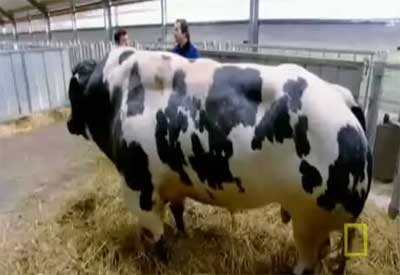
Did you know the Dairy industry is creating a super cow??


Dairy industry is creating a super cow

Walt Moore’s 850 cows lounge on beds of soft sand.
They are cooled by spritzes of water and breezes generated by fans. They eat a custom-blended diet of gourmet grains that a computer tells Moore will suit them best.
Moore orders sophisticated analyses of their rations and manure, getting the results on his iPhone, synced to his watch.
Each cow wears a collar with a computer chip that keeps track of her milk production, nearly four times that of the cows his father once tended, not to mention those his great-grandfather started the family farm with in 1909.
Moore’s Chester County, Pa., farm is so markedly different from the operation he took over from his father, Bill, that the elder Moore jokes: “Oh, my goodness, I don’t know if I’ll live long enough to learn how to farm or not.”
All this is not so much to coddle the cows as it is to make them better citizens of the planet. Cows have long been castigated for their methane-belching, manure-producing ways, one of agriculture’s top contributors to climate change.
In its 2012 inventory of greenhouse gas emissions, the U.S. Environmental Protection Agency fingered the methane emissions of “enteric fermentation”—the digestive process of animals with multichambered stomachs—as second only to emissions from natural gas and petroleum systems.
Dairy cow emissions in particular are so problematic that they have received the attention of the White House. President Barack Obama’s Climate Action Plan, released in March, proposed cutting methane emissions from the U.S. dairy industry by 25 percent by 2020.
Pundits scoffed. One headline: “Barack Obama and His EPA Make War On Dairy Cows.” But the idea had already taken hold seven years earlier when the U.S. dairy industry pledged the same goal.
After analyzing the dairy production chain, farm to fridge—or, as some like to say, grass to glass—they zeroed in on the cow’s gut, launching a massive effort involving farms and universities.
They call it the Cow of the Future project. The aim is a super-cow, a star athlete of the bovine world that produces far less methane and, while she’s at it, far more milk.
“We want it to be more productive. We want it to be healthier. We want it to be a problem-free cow,” said Juan Tricarico, director of the project.
To that end, cows and all of their processes have gone under the microscope. Their feed, their genes, their daily living conditions have been analyzed.
They have been fitted with gas-collecting backpacks and even had gas-analysis gear inserted into their stomachs.
“In a certain sense,” Tricarico said, the methane “is the price that we have to pay to transform inedible cow feed— something that you and I cannot consume and get nutrition from— into milk.”
Indeed, “if we got rid of cows, we’d have this tremendous problem with crop residues that we can’t digest,” said James Ferguson, a nutritionist at the New Bolton Center, the large-animal campus of the University of Pennsylvania School of Veterinary Medicine.
“We really need to think about a food web, a food network, of how we feed people and how nutrients move through the system,” Ferguson said. “Herbivores— cows— are a really important step in this process.”
Cows have already come far since the heyday of the daisy-bedecked Elsie, the Borden’s mascot.
As of 2007, the nation had about a third of the dairy cows it had in 1944, yet they produced more than half again as much milk. And they did it using 90 percent less cropland and 65 percent less water. They also made 75 percent less manure and 63 percent less emissions, a Cornell University study found.
There’s still room for improvement.
At Penn State University, researchers are experimenting with feeding cows oregano—a winner among about 200 plant and herbal compounds they tested to see if any would reduce methane production.
At New Bolton, where about a dozen staffers are working to make cows better, Ferguson and others have devised software that develops recipes fine-tuned almost to individual cows, or groups of similar cows.
A farmer enters data including the cow’s age and size, what kind of barn she’s in, whether she’s ever in a pasture or mud, and even how hot the weather is (a cow can get heat-stressed at 70 degrees). Out pops an optimal feed formulation for the 100 or so pounds of food each cow eats in a day, washed down by 30 gallons of water.
Penn’s Zhengxia Dou— a rare soil scientist on the faculty of a veterinary school— is investigating whether a cow’s feed can be tweaked to make her produce custom manure that matches the nutrient needs of different crops.
“Typically, they don’t match,” she said. Nutrients that wash off farm fields and into streams, where they cause algae blooms, have become a major water-quality issue.
Other researchers are exploring a version of a cow probiotic that would change the microbes in its stomach. They are investigating cow genetics to see if they can breed more efficiency into the dairy herd.
This is a big deal in Pennsylvania, which ranks fifth in the nation for dairy.
The cows at WalMoore farms in Cochranville, Pa., are among 535,000 in the state that produce about 1.2 million gallons of milk.
His farm incorporates much of what researchers have learned.
His milking parlor runs 24 hours a day, with the exception of two down periods to clean the facility.
Cows in their prime get milked three times a day instead of twice. This more closely resembles a natural cycle, Moore said, and results in 10 percent to 15 percent higher milk production.
To have the cows lactate longer—they require the same care whether they are producing milk or not—they are bred at a younger age and more often than yesterday’s farmers thought possible. “That’s research,” Moore said. “That’s understanding . . .it’s making the cow more efficient.”
A recent “cow of the month”—he profiles her for the farm newsletter—was producing about 17 gallons a day.
The feed itself is part of “a big recycling process,” Moore said. “We take the feed out of the fields and get two products—milk and manure. Milk goes to the consumer. The manure we store and reapply as fertilizer. We’re analyzing all of it” so it stays in balance.
Moore also has devised systems to improve the sustainability of the farm overall. The sand bedding is not only comfy for the cows; it’s inorganic, so it doesn’t grow bacteria, and it can be used over and over, after a sunshine and rain cleansing process of about 30 days.
Milk that comes out of the cow at 100 degrees runs through pipes cooled by 58-degree well water. The warmed water—75 to 80 degrees—is ideal for the cows to drink. A refrigeration unit finishes the milk-cooling process, and the waste heat from that preheats water for washing the milking parlor.
“When I was 6 years old, I told my mom and dad I wanted to go to Penn State and take agriculture and come back and take over the farm,” Moore said. “And here I am.”
His ultimate goal is to have the farm “available for the fifth generation, if they want it.”